Safewords & Scene Negotiation: A Complete Guide to Consensual Kink
Kink is built on a quiet paradox: the more control a scene appears to surrender, the more planning happens before it ever starts. Behind every blindfold and every set of cuffs there is usually a conversation — sometimes ten minutes long, sometimes spread across months — in which two people decide exactly what they want, what they don’t, and how either of them can stop everything at any moment. Those two skills — negotiating a scene and using safewords — are what separate consensual kink from everything else. For most people drawn to restraints, blindfolds, and roleplay, the real thrill isn’t the surrender itself; it’s knowing, with total certainty, where the edges are. This guide covers how that certainty gets built.
In this guide:
- What a Safeword Is (and Isn’t)
- The Traffic Light System, Explained
- Non-Verbal Signals for When Words Won’t Work
- Hard Limits and Soft Limits
- How the Negotiation Conversation Actually Sounds
- The Pre-Scene Checklist
- Your First Scene: Start Small
- Aftercare: The Scene Isn’t Over When It’s Over
- Mistakes People Make (and How to Avoid Them)
- Gear for Negotiated Play — and What to Look Out For
- Our Picks for a First Negotiated Scene
- FAQ
Only Got Time for a Quickie?
- A safeword is a pre-agreed word that pauses or stops a scene instantly — “red” and “yellow” are the most common.
- Negotiation happens before anything else: activities, intensity, marks, and aftercare are all agreed on while everyone still has their clothes on.
- Hard limits are never on the table; soft limits are approachable — but only in conversation outside a scene.
- If speech is restricted by a gag or a hood, a non-verbal signal (dropped object, tap pattern) is not optional — it is the safeword.
- RACK — Risk-Aware Consensual Kink — is the modern framing: risk is acknowledged openly, consent is explicit, and “safe” is never assumed.
- Aftercare — water, warmth, a slow debrief — is part of the scene, not an afterthought.
Why Do People Do It?

People come to kink for the sensation and stay for the trust. The communities that practice bondage, impact play, and roleplay have spent decades formalizing consent precisely because the activities can look risky from the outside — and the formalization is what makes them work. Organizations like the National Coalition for Sexual Freedom have built entire campaigns around the idea that consenting adults have the right to structure their own risk, and the two dominant frameworks reflect that history.
| SSC — Safe, Sane, Consensual | RACK — Risk-Aware Consensual Kink | |
|---|---|---|
| Origin | The older community standard, from the 1980s | Developed later to handle edge cases honestly |
| Core idea | Play should be safe, sane, and fully consensual | All play carries some risk; the standard is knowing and accepting it |
| Best for | Beginners building a baseline | Experienced players discussing risk openly |
| Common criticism | “Safe” and “sane” are subjective — who decides? | Demands real research and self-knowledge |
In practice, most couples end up somewhere between the two: they treat consent as absolute, and they talk about risk the way climbers talk about a route — openly, with respect for what could go wrong. That conversation is what the rest of this guide walks through, step by step.
What a Safeword Is (and Isn’t)
A safeword is a word agreed on before play begins that stops or pauses a scene the moment it is spoken — no explanation required, no negotiation in the moment, no reading between the lines. It exists because in many kinds of kink, ordinary language is part of the performance: a partner saying “no” or “stop” may be playing a role, which makes those words unreliable signals of a real problem. The safeword is the one word that can never be part of the script.
Anyone in the scene can call it, at any time — whether they are the one in restraints or the one holding them. And calling one is not a failure. Kink educators repeat the point constantly: a safeword that works — spoken, heard, and honored instantly — is the whole system doing exactly what it was built to do.
The Traffic Light System, Explained
The traffic light system is the most widely taught safeword framework in kink communities, and its appeal is its simplicity.
- Green — everything is good, continue.
- Yellow — slow down, ease off, or check in; something needs attention, but the scene doesn’t have to end.
- Red — stop everything immediately; the scene is over.
The difference between yellow and red matters more than it looks. “Yellow” lets someone adjust a restraint that pinches, ask for a pause, or lower the intensity without ending the evening — which makes people far more willing to use it early, instead of gritting their teeth until a small problem becomes a real one. That’s why educators teach the traffic light before anything else: it gives beginners permission to speak up in increments rather than all-or-nothing.
Non-Verbal Signals for When Words Won’t Work

Gags, hoods, deep roleplay, and certain positions can make speaking difficult or impossible — and that is exactly when a stop signal matters most. The rule repeated across kink education: if speech is restricted, a non-verbal signal is not optional; it is the safeword.
Common formats include holding a small object — keys, a bell, a ball — and dropping it to signal stop; two firm taps on the partner’s body or a nearby surface; a pre-arranged squeeze pattern; a distinct head shake. Whatever the signal, it should be rehearsed once before the scene starts, while everyone is fully dressed and clear-headed, and it should work even with limited mobility.
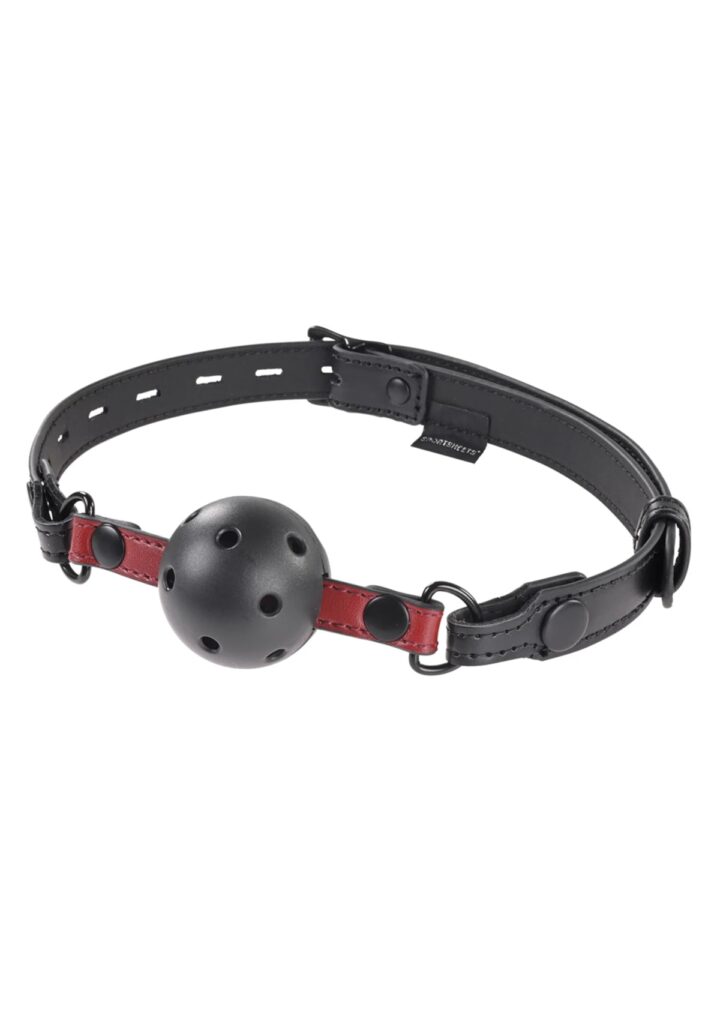
One more detail worth knowing: a gag with poor breathability, or one that can’t be removed quickly, turns a small problem into a dangerous one. Look for gags with air holes and quick-release buckles — and never combine a gag with anything that restricts breathing.
Hard Limits and Soft Limits
Almost every negotiation framework separates limits into two categories. Hard limits are activities that are entirely off the table — no discussion, no pressure, no “maybe someday” unless the person themselves brings it up first. Soft limits are the interesting middle ground: things someone feels unsure about, or would only try under specific conditions, or enjoys in small doses. The community term for a hard no is “squick” — a visceral “not for me” that needs no justification.
Two rules make limits work. First, limits are set before arousal clouds judgment: a limit agreed on Tuesday is not renegotiated mid-scene on Saturday night. Second, limits can change over time — but only in conversations outside of play. Pushing someone’s hard limit, even gently, is the fastest way to destroy the trust a scene depends on.
How the Negotiation Conversation Actually Sounds
For most couples, the hardest part of negotiation is the first sentence. The educators behind classic texts like The New Topping Book and The New Bottoming Book describe negotiation as part of the scene itself — the conversation where two people’s fantasies get shaped into something both of them actually want.
What does that sound like in real life? Openings people actually use include: “I read something interesting — would you be open to trying X together?” “What would make this fun for you? And what would make it stop being fun?” “Is there anything you’d want to try if you knew there was zero chance of it going wrong?”
The setting matters as much as the words. Negotiation works best outside the bedroom, with clothes on, when nobody is aroused or in a hurry — which is why many couples describe it as surprisingly romantic. It is, at its core, two people planning something for each other.
The Pre-Scene Checklist
Seasoned players tend to work through a surprisingly practical list before every scene, even after years together:
- Activities — exactly what will happen, and what won’t.
- Intensity — how hard, how long, how far.
- Marks — are bruises, welts, or rope marks acceptable? Where? (Neck and face are common hard limits.)
- Health — injuries, medications, mobility, anything that affects what’s safe today.
- Toys and lube — what’s needed, what’s clean, what’s within reach. Silicone toys pair only with water-based lube.
- Privacy — phones away, doors closed, no interruptions.
- Aftercare — what each person will need afterwards.
- Safewords — restated out loud, including the non-verbal signal.
Writing it down is optional; saying it out loud is not. The point of the checklist isn’t bureaucracy — it’s that a scene starting from total clarity is the one where people can actually let go.
Your First Scene: Start Small
A first negotiated scene doesn’t need to look dramatic. The most common advice from educators is to choose one new element — a blindfold, a pair of cuffs, ten minutes of restraint — and keep everything else familiar. Agree in advance that the ordinary words “stop” and “no” still work, because in a first scene they should. Keep it short. Afterwards, talk about what worked and what didn’t the way two people would review a recipe they cooked together.
Aftercare: The Scene Isn’t Over When It’s Over
Aftercare is the quiet part of kink that rarely makes it into films. It covers the physical — water, a blanket, something to eat — and the emotional: being close, being told things went well, time to come back down. After a scene, adrenaline and endorphins drop, and that drop can feel raw; the debrief, whether it happens five minutes or five days later, is where couples sort what to repeat and what to retire.
The detail that surprises newcomers most: aftercare isn’t only for the person on the receiving end. The partner who did the restraining often needs the reassurance that everything was wanted and enjoyed. Both sides get to name what they need — a low-temp massage candle and slow conversation is a common favorite — and neither needs to earn it.
Mistakes People Make (and How to Avoid Them)
The same handful of missteps shows up in almost every discussion of scene safety:
- Negotiating mid-scene. “Want to try X?” asked while someone is restrained is not consent; it’s pressure with extra steps.
- Treating silence as agreement. If someone goes quiet, that’s a check-in moment, not a green light.
- Improvised restraints. Household tape, zip ties, and extension cords sit behind a steady stream of emergency-room visits. Real cuffs and rope made for bodies are cheap insurance — tape and zip ties tighten, cut circulation, and can’t be released quickly.
- Skipping aftercare because the scene “wasn’t that intense.” The body doesn’t grade on a curve.
- Changing your limits to please a partner. A limit stated to make someone else happy stops being a limit.
The Candlelit Debrief
The room is quiet now, lit by one low flame that smells of jasmine and slowly melting wax; the cuffs are unbuckled, the rope coiled neatly on the chair. Two people sit close under a blanket, passing a glass of water between them and talking in the easy, unguarded voices people only have after being completely honest with each other. This is the part nobody photographs — and for most couples, it is the whole point.
Gear for Negotiated Play — and What to Look Out For
Restraints
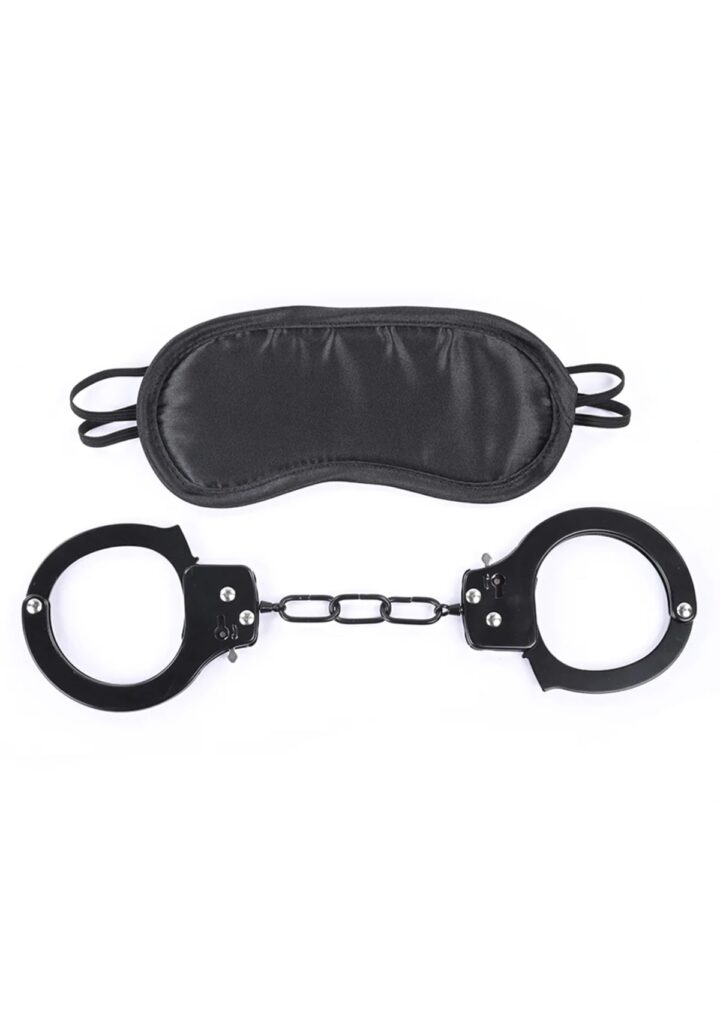
Cuffs are the beginner’s friend: quick-release, wide enough to protect the wrist, and far easier to undo than a bad knot. Rope is beautiful but demands skill — anyone using rope should keep safety shears within arm’s reach and check circulation regularly. Never leave a restrained person alone, even for a minute.
Gags and blindfolds
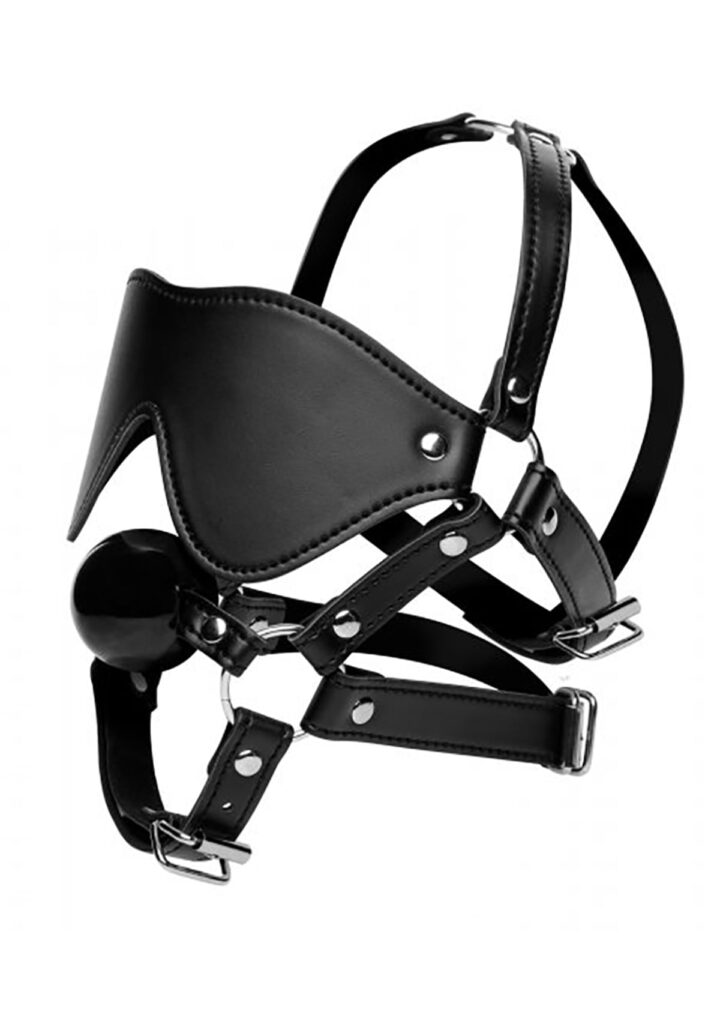
A gag always comes with a non-verbal safeword, full stop. Look for breathable designs with air holes and quick-release buckles. Blindfolds are the gentlest introduction to power play there is — removing sight amplifies every other sensation without restricting movement at all.
Impact toys
Paddles, crops, and floggers warm the skin and sting rather than bruise, when used with a proper warm-up. Stick to the fleshy places and avoid bony areas — spine, kidneys, joints.
Look out for: leather gear needs occasional care; porous materials (jelly, TPE) trap bacteria where they touch skin and are best avoided; silicone pairs only with water-based lube. If a toy is shared between partners or openings, cover it or clean it in between — a quick pass with a toy cleaner keeps the whole kit ready.
Our Picks for a First Negotiated Scene
- Shadow Cuff Kit — soft, quick-release cuffs at a beginner’s price; the right first restraint.
- Strict — Blindfold Harness and Ball Gag — a blindfold-and-gag set with air holes, for trying two classic elements at once.
- Cosmo Bondage 6-Piece Kit — a complete starter kit for couples who’d rather buy one box than five decisions.
- Saffron Interchangeable Gag — swappable bits make it easy to find the size and shape that feels right.
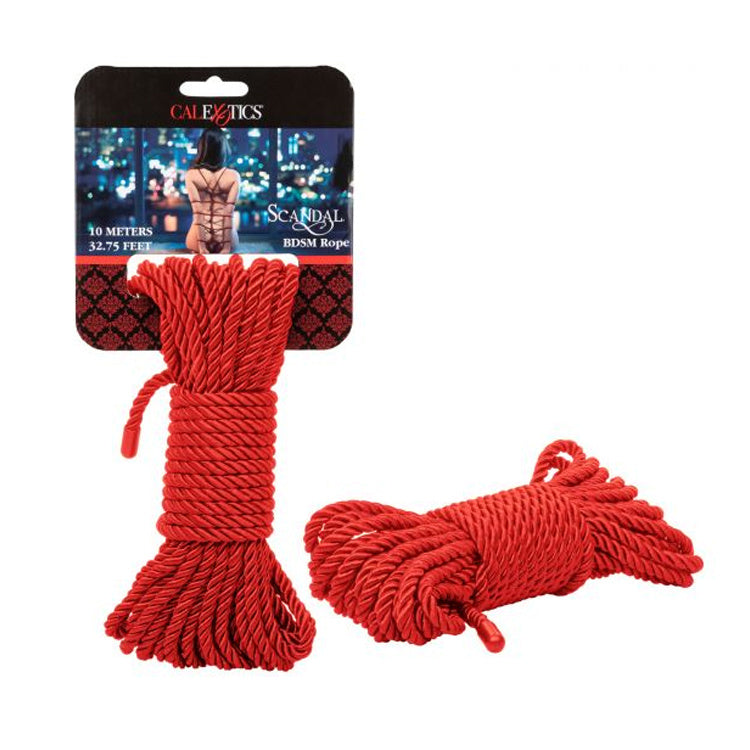
- Scandal BDSM Rope — 30 feet of soft cotton rope for couples who want to learn rope basics, with shears nearby.
- Peony Petal Low-Temp Massage Candle — pours as warm massage oil; the aftercare starter.
Our Picks


FAQ
Do we need safewords if we’re not doing anything extreme?
Safewords are useful at any intensity. A check-in word like “yellow” gives both partners a low-stakes way to adjust mid-scene, and knowing the system works builds the trust that makes deeper play possible later.
What if I freeze and can’t get the word out?
Freezing is common, and it’s exactly why non-verbal signals exist. Agree on a drop signal or tap pattern in advance — and remember the partner in the leading role should check in at intervals anyway. A safeword is a backup, not the only line of defense.
We’ve been together for years. Do we really need to negotiate?
Yes — but the negotiation gets faster. Long-term couples tend to negotiate in shorthand because they’ve already done the full version many times. What matters is that limits and signals get restated before every scene, because bodies, moods, and health change day to day.
What happens if a safeword is ignored?
Everything stops being kink and becomes a violation of trust. A partner who ignores, mocks, or “forgets” a safeword is not safe to play with. The signal’s entire value is that it is absolute — when it isn’t, nothing else in the scene is reliable either.
Can a safeword be a gesture instead of a word?
Yes. A tap pattern, a dropped object, or a hand squeeze can serve as the safeword — and for scenes with gags or hoods, a non-verbal signal is mandatory rather than optional.
If this guide sparked something, the natural next reads are our introduction to BDSM for beginners, the impact play guide, and a look at roleplay for beginners. Still figuring out the conversation part? How to talk to your partner about toys has the scripts.
Ready to explore? Shop our BDSM & Kink collection.