Remote-Controlled Vibrators Explained: Intimacy from Any Distance
The first remote-controlled vibrators were a novelty — a small plastic remote clipped to a toy so nobody had to fumble for buttons mid-moment. In the years since, the category has quietly become one of the most meaningful corners of the pleasure market. Some people buy a remote toy because a relationship spans time zones. Others are drawn to the idea of handing control to a partner across the dinner table, or simply want to adjust settings without breaking the mood. The technology now reaches further than a hand ever could, but the appeal is unchanged: shared sensation when presence isn’t possible, and a small ritual of trust when it is. This guide explains how remote and app-controlled toys actually work, the difference between a handheld remote and a phone app, what to look for when buying, and how people really use them — alone and together.
In this guide:
- The quick summary
- Why people choose remote toys
- 1. How remote control actually works
- 2. The long-distance angle
- 3. Handing over control
- 4. Wearable vs handheld
- 5. App features worth knowing
- 6. Quiet by design
- 7. Privacy and app accounts
- 8. Charging and care
- Gear categories and what to look out for
- The two-city ritual
- Our picks
- FAQ
Only got time for a quickie?
- Remote control means a small dedicated remote (usually radio-frequency) that works anywhere in the room — no phone required.
- App control means the toy pairs with a smartphone over Bluetooth, and an invited partner can drive it from anywhere with an internet connection.
- Wearable designs (eggs, panty vibes, dual-stimulation wearables) stay in place hands-free; handheld remote toys suit more targeted use.
- Quiet motors and smooth silicone bodies make most modern remote toys discreet enough for a shared living space.
- Silicone toys pair with water-based lube only, and most remote toys now charge magnetically — check the cable before the first trip away from home.
- For a first remote toy, a wearable egg with both remote and app control covers the most ground at the lowest price.
Why do people choose remote toys?

Motivations vary more than the marketing suggests. Studies have long estimated that around 14 million couples in the United States consider themselves to be in long-distance relationships — and for many of them, a remote toy is the closest thing to touch that technology offers. But distance is only one reason. For plenty of couples in the same city, the appeal is psychological: handing over control of one’s own pleasure is a small, safe act of trust, and anticipation is a powerful ingredient. Others simply like the convenience — changing intensity without breaking rhythm, or using a toy hands-free while lounging. And a growing number of people treat app-connected toys as a solo upgrade: guided patterns, saved presets, and a remote that means the toy itself never needs to be reached for.
“In the years I’ve been at Babeland, I’ve seen a lot of iterations of We-Vibe’s signature C-shaped wearable vibrator,” explains Lisa Finn, sex educator and brand manager at Babeland, “but this one definitely is their best, with an even more adjustable design to contour more specifically to the wearer, an even smoother motor, and a remote” — the point being that wearable, remotely controlled design has matured dramatically in a short time. What was once clunky and experimental is now a mainstream category, and the engineering shows.
1. How remote control actually works
Two distinct technologies sit under the “remote toy” umbrella, and they behave differently. Radio-frequency (RF) remotes are the simpler of the two: a small dedicated controller communicates directly with the toy, usually over a range of a few meters, with no pairing app and no phone involved. They are dependable, instant, and survive a low phone battery. Bluetooth plus app is the newer path: the toy pairs with a smartphone, and control happens through a companion app. On its own, Bluetooth reaches roughly ten meters — but when both partners are connected through the app’s servers, distance stops mattering entirely, which is how a toy in New York can be driven from a phone in London. Many wearables now include both paths: a physical remote for the same-room moment and an app for everything beyond it.
For most people, the practical difference is simple: if the toy will only ever be used within arm’s reach, a plain RF remote is enough. If there is any chance of controlling or being controlled across a city, a country, or a time zone, app connectivity is the feature that matters.
2. The long-distance angle
Long-distance couples have always improvised: phone calls, video, letters. Each generation adds a layer. App-controlled toys are this decade’s layer, and they occupy a unique place because they address the one thing distance cannot fake — physical sensation. The emotional weight comes from synchrony: a partner’s finger on a screen becomes a pulse felt across the world, in real time. Sex educators tend to frame it carefully — no device replaces touch, and the healthiest use of these toys treats them as a bridge, not a substitute. “It’s designed for G-spot fun,” says Carol Queen, sex educator, of one popular app-connected wearable — and across the category, that’s the pattern: toys built first for genuine sensation, then given a remote for wherever the wearer happens to be.
Practically, long-distance use requires a few minutes of one-time setup: both partners install the same app, the toy is paired to the wearer’s phone, and an invite link connects the second phone. From then on, the controlling partner can draw patterns, adjust intensity, or simply hold a button. Some couples schedule it; others leave it spontaneous. Most report that the value is as much about feeling considered as it is about the sensation itself.
3. Handing over control

The trust element is real, and it’s part of why remote toys feel different from ordinary vibrators. Giving someone else the controls is a small surrender, and receiving them is a responsibility. The healthiest way in is a conversation before the toy is ever charged. People find it easiest to raise the subject casually: “I read something interesting — would you be open to trying this together?” or “What if I gave you the controls and you set the pace?” Both work because they frame the toy as a shared experiment rather than a demand.
Two ground rules tend to make the first session smoother. First, agree that the wearer can stop things at any moment, without explanation — a safe word works as well here as it does anywhere else. Second, start with slow, low settings; intensity that arrives without warning is jarring, but intensity that builds is thrilling. Many couples also agree on a ritual for the end of a session, however simple, so the toy doesn’t simply switch off mid-feeling.
4. Wearable vs handheld
Remote toys split into two families. Wearables — egg vibes, panty vibes, and dual-stimulation C-shapes — are designed to stay in place on their own, held by the body or by underwear, so the hands stay free. They are the natural choice for partner control and for anyone who wants sensation while doing almost anything else. Insertable wearables always include a retrieval tail or cord; that detail is non-negotiable. Handhelds — remote wands, suction toys, and G-spot shapes — are aimed by hand and simply use the remote for settings. They suit solo sessions and partnered play where positioning matters more than hands-free wear.
For a first purchase, most people land on a wearable: it demonstrates the entire point of the category in one toy. Handheld remote toys make more sense as a second purchase, once someone knows which sensations they prefer.
5. App features worth knowing
Not all apps are equal, and the feature list is what separates a basic remote from an experience. The functions people actually use: live pattern drawing (the controlling partner sketches a wave that plays immediately on the toy), saved presets, music sync (the toy vibrates to a playlist), and voice control for hands-free adjustment. Some platforms add video calling with the toy reacting to voice — useful for long-distance couples who want the call and the sensation in one screen. A few apps also track battery level remotely, which solves the classic long-distance problem of a toy dying mid-session.
One caveat worth knowing: each brand’s app only works with that brand’s toys. There is no universal app, so the app ecosystem is a quiet part of the buying decision. If both partners already own a toy from the same brand, the shared experience is simpler.
6. Quiet by design
Discretion is a design priority in this category, because a wearable is often used where silence matters. Modern remote toys use quieter motors than their predecessors, and the difference between a “buzzy” high-pitched motor and a “rumbly” low-frequency one is audible. Rumbly motors are not only quieter — most people also find the deeper vibration more satisfying, and lower frequencies travel better through the body. If a shared home or thin walls are part of the picture, it’s worth choosing a toy whose reviews specifically mention noise, or one marketed as whisper-quiet. Under a blanket or across a room, the gap between a loud and a quiet motor is the difference between relaxing and listening to the door.
7. Privacy and app accounts
App-connected toys are devices that talk to the internet, so a little caution goes a long way. Reasonable habits: create the account with a nickname rather than a legal name, review which permissions the app requests (a vibrator app does not need contacts or photos), and delete the account if the toy is ever resold. Most reputable apps encrypt control sessions and keep no session recordings by default — but checking the privacy policy takes two minutes and answers the question properly. It’s also considerate to tell a partner where the app is installed; an app icon on a shared home screen is not the disclosure anyone wants to discover second-hand.
8. Charging and care
Remote toys need the same care as any silicone toy, with one added habit: charging discipline. Most modern wearables charge magnetically, which means the cable is proprietary — lose it and the toy is a paperweight until a replacement arrives. Keeping the cable with the toy’s storage pouch is a small ritual that pays off. Wash before first use and after every session with warm water and mild soap or a dedicated toy cleaner, and dry thoroughly. Because the bodies are silicone, only water-based lubricants should ever touch them — silicone lube bonds to silicone and damages the surface. Traveling? A charging brick is fine, but a laptop’s USB port is often slow; many people charge the night before rather than the hour before.
Gear categories and what to look out for
Wearable egg vibes — small, soft, inserted or nestled; the classic entry point. Look for: body-safe silicone, a retrieval tail, app or remote control, and a motor described as quiet. Panty and clitoral wearables — sit against the clitoris inside underwear; the most discreet family. Look for: a secure magnetic or clip fit, thin profile, and long battery life. Remote suction (air-pulse) toys — combine air-pulse sensation with a remote. Look for: a soft silicone nozzle and multiple intensity steps, since air-pulse builds in stages. Dual-stimulation wearables — internal and external arms in one wearable C-shape. Look for: an adjustable neck and independent control of the two motors.
Look out for: porous materials like TPE or jelly passed off as premium (silicone is the body-safe standard); insertable wearables without a tail or cord; vague “compatible app” claims (confirm the app name and platform before buying); and non-waterproof electronics, which limit where a wearable can be cleaned or enjoyed.
| Type | Control | Best for | Typical price |
|---|---|---|---|
| Wearable egg | Remote or app | Hands-free wear, partner play | $20–$90 |
| Panty / clitoral wearable | App | Couples, discreet use | $40–$80 |
| Remote suction (air-pulse) | Remote | Solo or partnered air-pulse sensation | $50–$100 |
| Dual-stimulation wearable | App | Internal + external at once | $60–$120 |
The two-city ritual
When the call connects, it’s early evening for one of them and almost midnight for the other. The lamp is low, the room quiet except for the soft fan of a laptop. The phone lies face-up on the sheets, its screen a dim gold in the dark. A name appears — a request to take control — and it isn’t a demand, only an invitation. Across the distance, the toy answers with a low, steady pulse, the kind that begins like a heartbeat and builds only if asked. For a while there is nothing on the line but breathing, and the strange, lovely sense that the night has two doors opening into the same room.
Our picks
The five picks below move from gentle to sophisticated — every one is silicone-bodied, rechargeable, and chosen to make a first remote experience easy.
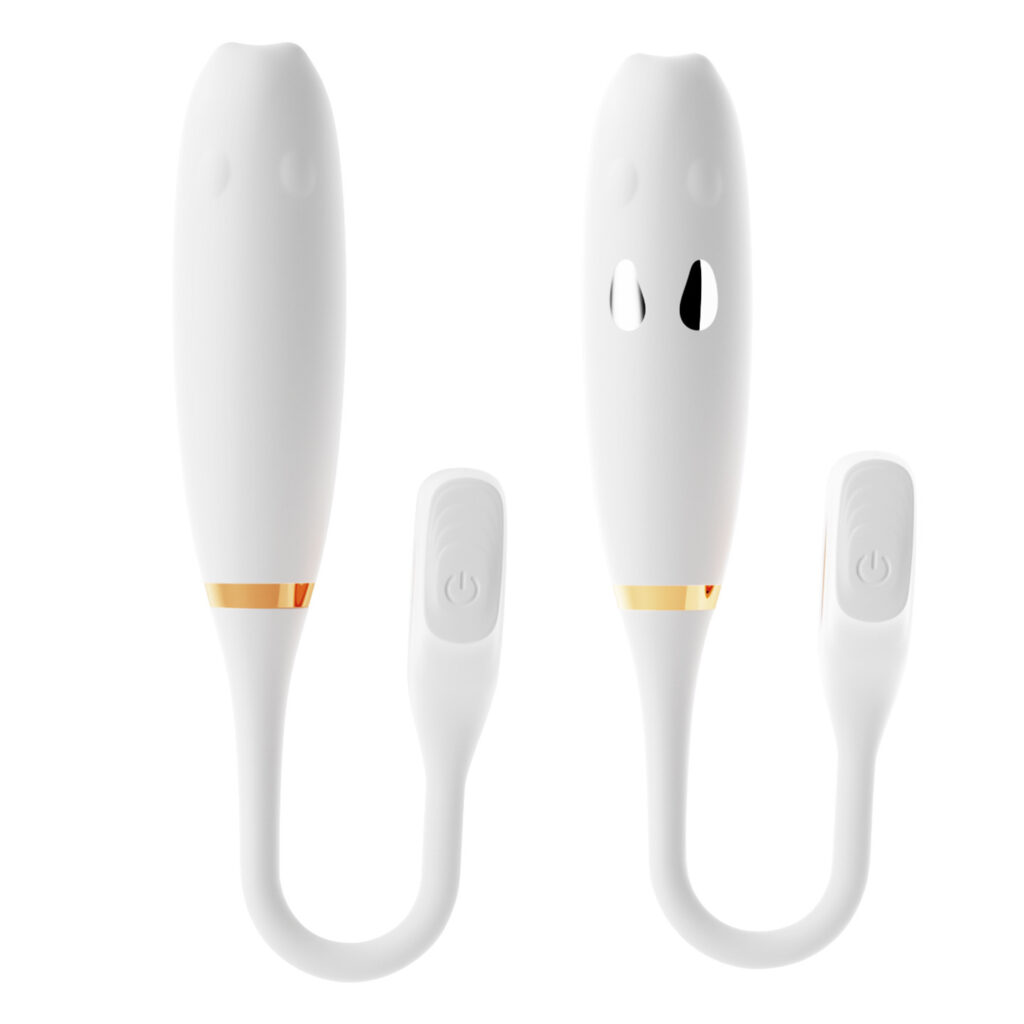
- Whale Whisper App Remote Egg Vibe — a soft, approachable entry-level egg with app control; the gentlest way to test the water.
- App Controlled Wearable Remote Vibe — the classic “hand it over” wearable, with both a remote and an app path.
- Remote App-Controlled Wearable Egg Vibe — a smooth egg with retrieval tail and multiple patterns; ideal for first-time wearers.
- Tangerine Bliss Remote Suction Vibe — remote air-pulse for people who already know they prefer suction over vibration.
- App-Controlled Wearable Dual Stimulation Vibe — a couples’ wearable delivering internal and external sensation at once, for pairs ready to share the controls.
Our Picks




FAQ
Do I need a smartphone for a remote-controlled vibrator? No — RF-remote toys work with their included dedicated remote. A phone is only needed for app features like long-distance control.
Can an app-controlled toy really be controlled from another country? Yes. Both partners install the brand’s app, the wearer pairs the toy to their phone, and an invite link connects the second phone. Once linked, control runs over the internet from anywhere.
Are wearable vibrators loud? Most modern wearables are engineered quiet, and rumbly low-frequency motors are quieter than high-pitched buzzy ones. If sharing a home, check reviews that specifically mention motor noise.
Can a remote toy be used solo? Absolutely. The remote is convenient for adjusting settings without reaching for the toy, and app presets make solo sessions hands-free.
What lubricant should I use? Water-based only — silicone lubricant damages silicone toy surfaces. A few drops on the toy or the body go a long way.
Ready to explore? Browse our Vibrators collection — every remote toy selected for body-safe silicone and quiet, reliable motors.